

The Best Time of Year to Sell a Home in the Inland Empire
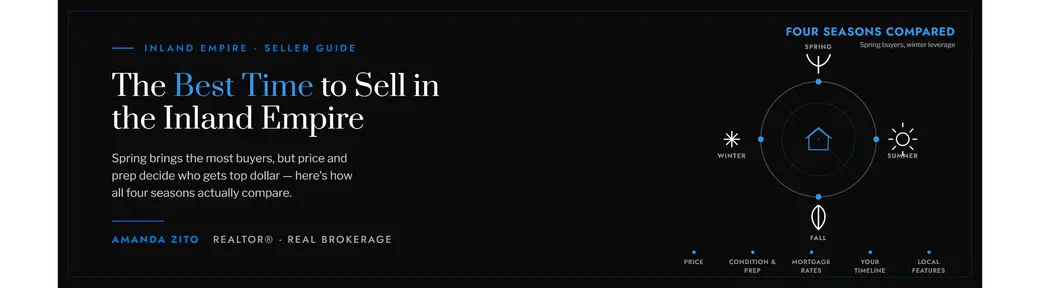
When is the best time of year to sell a home in the Inland Empire? Late winter through spring — roughly February through May — is typically the strongest window for sellers in Riverside and San Bernardino counties, when buyer activity peaks before summer heat arrives. But the right time depends more on your pricing and your timeline than the calendar.
Most sellers ask about timing before they ask about anything else. It makes sense: you've heard that spring is the season to sell, and you don't want to leave money on the table by listing at the wrong moment.
Here's the honest version. Season influences how many buyers see your home and how quickly it moves. It does not override price, condition, or how your home is marketed. A well-prepared home priced correctly in November will outperform an overpriced home in April every single time — and I've watched that play out in Riverside, Fontana, Rancho Cucamonga, and across the High Desert for close to twenty years.
So let's walk through what each season actually looks like in the Inland Empire, and how to decide what fits your situation.
Spring: The Strongest Buyer Window in the Inland Empire
Spring is the traditional answer, and in Riverside County and San Bernardino County it holds up — with one local wrinkle. Because Southern California winters are mild, our spring market starts earlier than it does in most of the country. Buyer traffic often picks up in February, not April.
What works in your favor:
- The largest pool of active buyers, including commuters shopping from Los Angeles and Orange County
- Buyers who want to be moved and settled before the school year begins
- Landscaping and exteriors look their best before the summer heat sets in
- Competitive conditions that can produce multiple offers on well-priced homes
The tradeoff: you're not the only seller who knows this. Inventory climbs in spring, so a home that isn't prepared and priced sharply can get lost. Standing out in a busy market takes more than good timing.
Best for: Sellers who want maximum exposure and are willing to invest in prep work before listing.
Summer: Strong Activity, More Competition, and the Heat Factor
Summer keeps much of spring's momentum, especially in June. Buyers who started looking in March are getting serious about closing.
But the Inland Empire has a summer variable that coastal markets don't. Triple-digit temperatures in Riverside, San Bernardino, and especially the High Desert change buyer behavior. Showings shift to mornings and evenings. Lawns stress. Buyers notice an air conditioning system that struggles, and they notice a home with paid-off solar.
Summer also brings vacations and distraction, and by July and August the buyer pool thins as families finalize moves. Inventory is usually at its highest point of the year.
Best for: Sellers with strong cooling systems, shade, solar, or a pool — features that show well in exactly the conditions buyers are experiencing.
Fall: Fewer Buyers, But More Serious Ones
Fall gets underrated. Yes, showing traffic drops after Labor Day. But the buyers still out looking in September and October are usually motivated — relocation buyers, military families on PCS orders, and shoppers who have been outbid all spring and are done waiting.
Competition from other sellers drops too. Fewer active listings means your home gets a larger share of the attention it does receive. And Inland Empire weather in October and November is genuinely pleasant, which helps with curb appeal and open houses.
Best for: Sellers who missed the spring window and want less competition, or who need to close before year-end for tax or relocation reasons.
Winter: The Quietest Season — and Sometimes the Smartest
Winter is the season most sellers avoid, which is exactly why it can work. From Thanksgiving through January, Inland Empire inventory typically hits its low point.
The buyers shopping in December are not browsing. They're relocating for a January job start, closing before a lease ends, or acting on a life change that doesn't wait for spring. Corporate relocation and military transfer buyers are active year-round, and the Inland Empire draws a steady stream of both.
The math is straightforward: fewer buyers, but far fewer competing homes. If yours is one of a handful of well-presented listings in your price range in Corona or Redlands, you have leverage you wouldn't have in April.
Best for: Sellers with a distinctive property, sellers who need to move on a specific timeline, and anyone who would rather have less competition than more foot traffic.
What Matters More Than the Season
After two decades of listings across Southern California, here's what I've found actually moves the needle:
Price. The first two weeks on market generate the most attention your home will ever get. Price above the market and you spend that window as a comparison point for the homes that are priced right.
Condition and prep. Paint, landscaping, decluttering, and professional photography influence results more than your list date. Prep usually takes three to six weeks — plan backward from when you want to be live.
Mortgage rates. Rate movement shifts buyer purchasing power faster than any seasonal pattern. A rate dip in October can create more urgency than a slow week in May. You can track current conditions through Freddie Mac's mortgage rate survey or the Redfin Data Center.
Your own timeline. If you're selling to buy your next home, the two transactions have to line up. That coordination usually dictates the calendar more than seasonality does — especially if your next home is out of state.
Local features buyers pay for. In the Inland Empire, paid solar, RV parking, an ADU, a three-car garage, and single-story layouts consistently draw attention. If your home has them, marketing them well matters more than which month you list.
How to Decide What's Right for You
Work backward, not forward.
Start with the date you need to be out. Subtract 30 to 45 days for escrow. Subtract the average days on market for your price range and area. Then subtract your prep time. That tells you when to start — and it's usually sooner than sellers expect.
If that math lands you in January, list in January. The seller who waits for "the right season" without a reason often waits themselves out of a better outcome.
Frequently Asked Questions
What month do homes sell fastest in Riverside and San Bernardino counties? Spring months — typically March through May — tend to produce the shortest days on market because buyer demand peaks then. That said, timing varies by price range and city, and a correctly priced home can sell quickly in any month.
Is it a bad idea to list a home during the holidays? No. Inventory drops sharply in November and December, so serious buyers have fewer options. Sellers with flexible showing schedules often do well in this window, particularly with relocation and military buyers.
Does the High Desert follow the same seasonal pattern as the rest of the Inland Empire? Roughly, but not exactly. High Desert markets like Victorville, Apple Valley, and Hesperia see sharper summer heat effects and a larger share of commuter and relocation buyers, which can smooth out seasonal swings compared to Riverside County.
Thinking About Selling? Let's Talk Timing.
The best time to sell your Inland Empire home is the time that fits your price, your property, and your plans. I'm happy to walk through your specific situation — what your home would likely bring, how long it should take, and whether waiting for a different season would actually help you.
Call or text me at 949-484-9486, and we'll map it out.
Amanda Zito, REALTOR® The Zito Group | Real Brokerage Serving the Inland Empire, High Desert, and Lake Travis, TX CA DRE #01740063 | TX TREC #840088 SoldByZito.com
Categories
Recent Posts











“Your goals come first. My job is to help you make the right move.”